
Sightseeing in Alexandria is different because the city has little to do with the rest of Egypt’s destinations. Its location, its history, its climate and even its atmosphere and social life are very different. And let’s say it’s a place that will appeal to those who travel with one eye on what is seen and another on what is not, since what was once the capital of Ancient Egypt in Ptolemaic times lives to a large extent on evocations of its past. Something ideal for the inspiration of great writers, as it happened and as we will see.
However, this great port metropolis, open to the sea, is increasingly recovering its heritage and is enhancing it in the best possible way, to such an extent that it is known as ‘the Pearl of the Mediterranean’. Therefore, we dedicate this page to telling you what to see in Alexandria, whether you like Greco-Roman culture or prefer to focus on other more current attractions. And if you want us to go further and plan a tailor-made trip, please contact Egipto Exclusivo. We can organize the best experience of tourism in Alexandria, with a complete vacation in which this city is the epicenter or with a day trip from other parts of the country. And always with the best professionals at your service!
Alexandria is greatly influenced by its location: bathed by the Mediterranean, it was for many centuries one of the most important ports in this sea. It is located at the northwestern end of the Nile Delta, although no branch of that great river passes through here anymore: the closest of the two existing today, the Rosetta, flows into the sea about 60 km to the east. Cairo, on the other hand, is about 200 km away.
Alexandria is, therefore, a city with a very Mediterranean climate. Warmer than that of the countries on the European shore of this sea, but more temperate and pleasant than most cities in Egypt, especially those located outside the Nile Delta. These are its most outstanding climatic values, which you will want to know if you are coming from tourism to Alexandria:
Therefore, the protection you should take here against the sun does not differ from what you would use in another Mediterranean holiday destination.
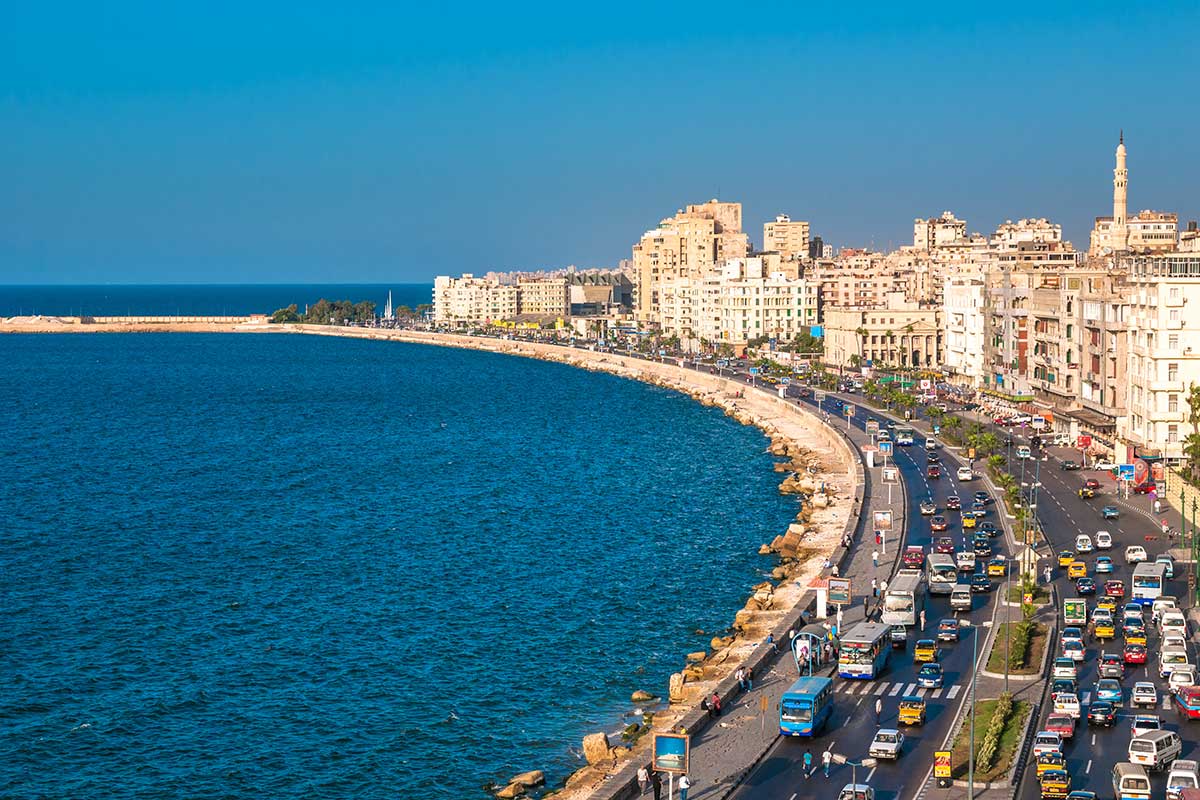
When sightseeing in Alexandria it is very important to know its history, even if only in broad strokes, as we will do in these lines. Why? Because it simply differs greatly from the history of Ancient Egypt: here we will not talk about great pharaohs, as in the rest of the country. Instead, the great Greco-Roman characters, Coptic Christianity and, of course, Arab civilization acquire great notoriety. In addition, it developed a very special character during the 19th century and the first half of the 20th century, which it wants to resume in the 21st century with the increase in tourism in Alexandria.
In Alexandria, everything began with Alexander the Great, as can be guessed from its name. The great Hellenic emperor founded this city in 331 BC, in the context of his war against the Persian king Darius III. He had arrived a year earlier, triumphant from his conflicts in the Near East and acclaimed as the liberator of Egypt. He adopted the title of pharaoh and became involved in the local culture, as demonstrated by his visits to ancient Thebes (present-day Luxor) and to the Oracle of Siwa.
He considered that Egypt should open up to the Mediterranean world, taking greater advantage of its large coastal extension, something it was not doing enough. So he decided to create this port city from scratch. And although Alexander the Great’s stay was brief, as he left that same year to conquer Persia, his seed germinated and his memory never faded. In fact, after his death in Babylon in 323 BC, his body was brought in a gold coffin to this city, and it is known that several Roman emperors paid their respects to him… but some time later, it was lost. Perhaps in the 3rd or 4th century, during some episode of disturbances, or it was hidden in a safer secret place. But the truth is that it has never appeared, despite the fact that current archaeologists do not give up trying. For some, it has become a kind of Holy Grail of modern archaeology and, if discovered, the media impact could be comparable to that of Tutankhamun’s tomb, which would undoubtedly relaunch the tourism of Alexandria.
The Alexandria of that time was a prosperous city, key in the trade routes between Europe and Asia. And it was also a city of high culture, where wisdom was protected as a valuable treasure of present and future. This was demonstrated by the main constructions of the city. The famous Lighthouse, one of the Seven Wonders of the Ancient World , not only served as a luminous reference for merchant ships but was also a metaphor for the height of the city. The Museum (or Museion), an educational and cultural building that also served as a residence for the Ptolemaic dynasty, was named so because it was conceived as an authentic container of knowledge, dedicated and protected by the Muses. And in this great complex was located the Library, the most important of Antiquity, with more than half a million manuscripts. Legend has it that all ships arriving in port had to ‘pay the toll’ of presenting a book to be copied here. Unfortunately, it was lost, and those who come from tourism to Alexandria have to settle for the New Library, from the late twentieth century.
During the Roman domination, after the suicide of Cleopatra in her Alexandrian palace, the city maintained its importance. Egypt having become one of the granaries of the Empire, this was the great port of departure for goods and also a rich financial center in which several hundred thousand inhabitants resided. Although perhaps the great legacy of the Roman and Byzantine era was Coptic Christianity, as this city had a fundamental importance for the consolidation and diffusion of this religion, being the home of key figures such as Saint Mark or Saint Catherine. The Jewish population, for its part, had already been established in the city for several centuries, attracted by the tolerance and prosperity of the Ptolemaic era.
Alexandria, like the rest of Egypt, was conquered by the powerful Arab armies, but not as quickly as other cities. It was in 642, after more than a year of siege. Thus fell a city full of palaces, theaters, gardens and other places that allow us to imagine this city as one of the most advanced in the world, from a modern point of view.
The destruction of the Library of Alexandria is often attributed to this conquest, but it is most likely that this had already occurred some time before, perhaps due to natural disasters and local tensions. But the truth is that Alexandria never regained its past splendor, also plagued by attacks from pirates and crusaders.
It is only worth mentioning a certain parenthesis during the Middle Ages, when Venice dominated international trade and Alexandria occupied a strategic role for the merchants of the Serenissima Republic, who found harmony with the Mamluk sultans who governed the country. But luck changed when the Portuguese discovered and exploited the Cape route, at the end of the 15th century. Shortly after, Alexandria and the rest of Egypt were conquered by the Turks, who prioritized the port city of Rosetta to some extent.
Due to its strategic importance, Alexandria and its surroundings was the site of naval battles between the French under Napoleon and the British led by Admiral Nelson. Diving to the bottom of the sea and discovering the remains of those battles is, as we will see, a surprising activity of tourism in Alexandria. The latter ended up winning, guaranteeing a position of influence over the new rulers. It was the time of the vali of Egypt Mehmet Ali in the name of the Turkish sultan, who promoted large industrial projects in the city, especially a large shipyard.
Behind them were large foreign investors and engineers, mainly French and British, who found here an open, cosmopolitan and flourishing city. Multiculturalism was one of its main hallmarks, with numerous and populous communities of different origins, highlighting among them the Greek and Jewish. This lasted until the first half of the 20th century, and the best testimony of this were the great literary works that important writers illuminated here, especially The Alexandria Quartet by Lawrence Durrell, another claim for those who come from tourism to Alexandria.
However, the Arab-Israeli tensions in the Near East and the socialist revolution of 1952 led to the departure of numerous foreigners from the city and the slowing down of the arrival of new ones. On the other hand, the local population began to grow exponentially, as in the rest of the country, until our days
Alexandria currently has a population of about 5 million inhabitants, with a high population density, in line with the other cities of the Nile Delta. And although the atmosphere is not as multicultural as it used to be, the tourism of Alexandria is serving as an engine of change.
Local institutions have realized that a good part of the future lies precisely in the past and have decisively opted for the recovery and enhancement of the Greco-Roman heritage, which has a great differentiating power with respect to other tourist destinations in Egypt. And this is an important complement to the great engine of the city: its western port, which accounts for almost two thirds of the country’s foreign trade operations.
Despite the past splendor of the city, if you do tourism in Alexandria at present you will not find more or less delimited historical neighborhoods, as for example does happen in Cairo. The city that has reached us is mainly the result of the great economic and demographic development experienced in the last two centuries. In that urban growth many vestiges of its history were lost, but that loss began long before because of natural disasters and the rise in sea level between 6 and 8 meters in two millennia, causing part of its riches to be flooded by water.
In any case, you will notice that the main backbone of the city is its Corniche or promenade with road traffic, of more than 20 kilometers. The area where there is a greater concentration of points of interest is around the eastern port, which was once the port of the city. On its breakwaters are located two references of the tourism of Alexandria current: on the one hand, the citadel of Qaitbay (where the Lighthouse once stood) and, on the other, the New Library of Alexandria. Between both and inland, the area considered as the center, where you can take the true pulse of the current city.
This absence of thematic neighborhoods means that the different attractions of the tourism of Alexandria are scattered throughout the urban area, although below we group them by themes for a better understanding.
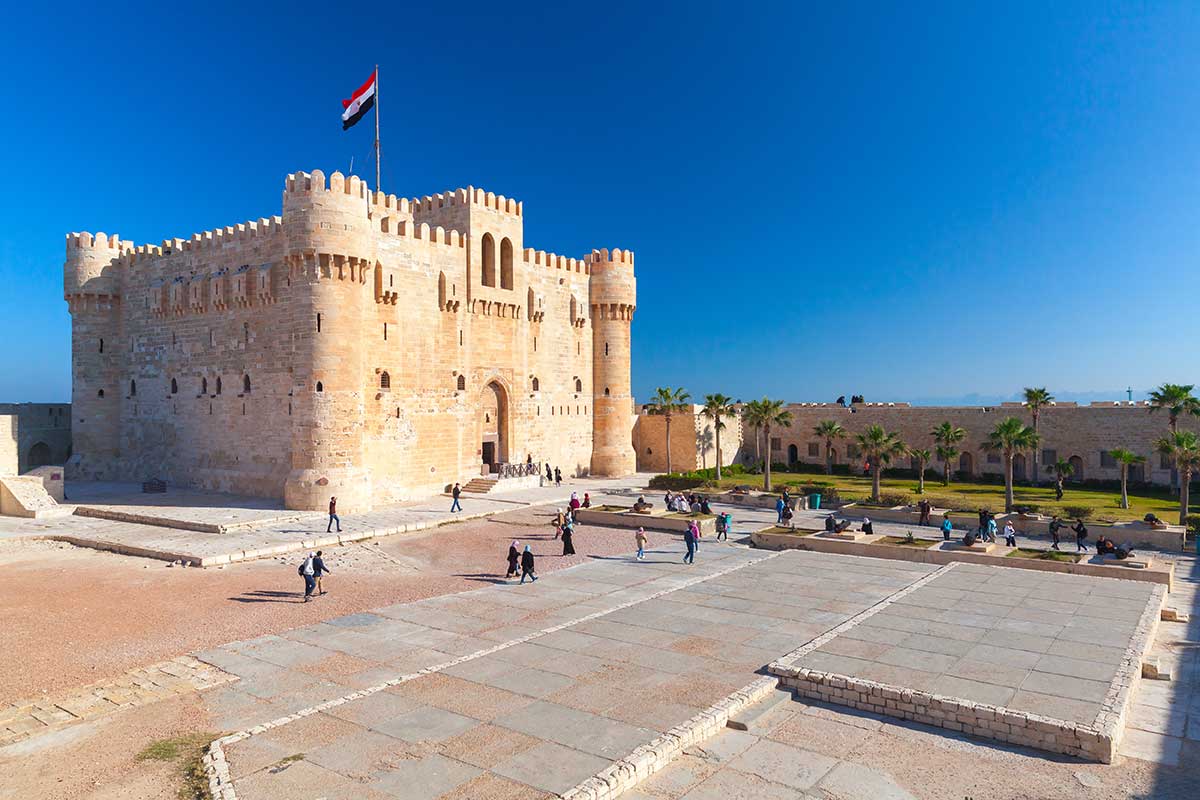
Those who do tourism in Alexandria will find two large visitable spaces: the Citadel of Qaitbay and the New Library of Alexandria. And both, in some way, recall two of the constructions that gave fame to the ancient city: the Lighthouse and the Library, respectively.
The Citadel of Qaitbay, also called Fort Qaitbay, is a beautiful and well-preserved defensive fortress with bastions and ample interior space, built in the late fifteenth century and early sixteenth, in Mamluk times. Its function was none other than to offer protection against the threat already posed by the Ottoman Empire, a power that ended up conquering the city and the country shortly after. In addition, it provided an extra security to the ships that arrived at the port. And it was erected right on the site where the Lighthouse was, on the island of Pharos: a huge construction more like a modern skyscraper than a mere luminous signaling tower and that had already been in ruins for centuries because of collapses and natural disasters, such as the earthquake of 1303.
The Ottomans understood the strategic utility of this citadel, so they kept it in operation. The same happened with Napoleon , who was very prone to settling in this type of fortress during his invasions, and later with Governor Mehmet Ali, who undertook a major rehabilitation project. In the late 19th century, it suffered significant damage from the attack of British ships, but during the 20th century, it underwent numerous restorations.
Currently, some of the areas that tourists can explore include its keep, rooms for different uses, its courtyard, and its mosque, which is no longer used for worship. In addition, it houses two museums: one about marine life and another in aquarium format.
Apart from all this, it is worth mentioning that the Citadel of Qaitbay is a good recommendation for all people who are touring Alexandria, regardless of whether they are interested in history and culture or not. This is because the place offers us some of the best panoramic views of the city center and its port.
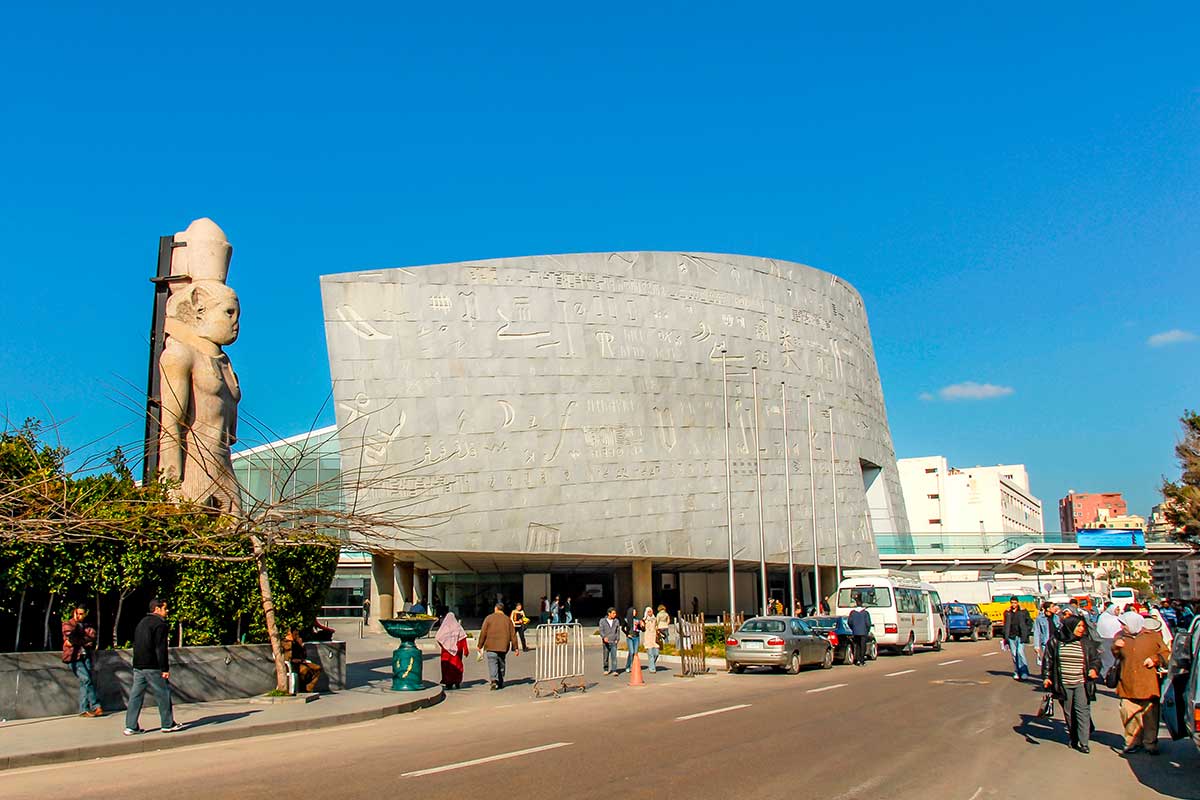
The New Library of Alexandria, or Bibliotheca Alexandrina, was an ambitious project of the 90s: a large, newly built building in an avant-garde style, the work of the Norwegian architectural firm Snøhetta, next to the seawall where the ancient Library once stood. Some vestiges of it were found during the works, such as mosaics or sculptures in the Greek style. . An institution in which, by the way, some milestones of scientific knowledge were produced, such as calculations on the circumference of the Earth or the elaboration of astronomical maps.
This new library is made of cement, granite and glass, and is not only conceived as a container for books and other pieces (there are several hundred thousand books and tens of thousands of maps, among others): it is also a space for visits and events, such as the Alexandria International Book Fair, which is held here and brings a lot of tourism to Alexandria.
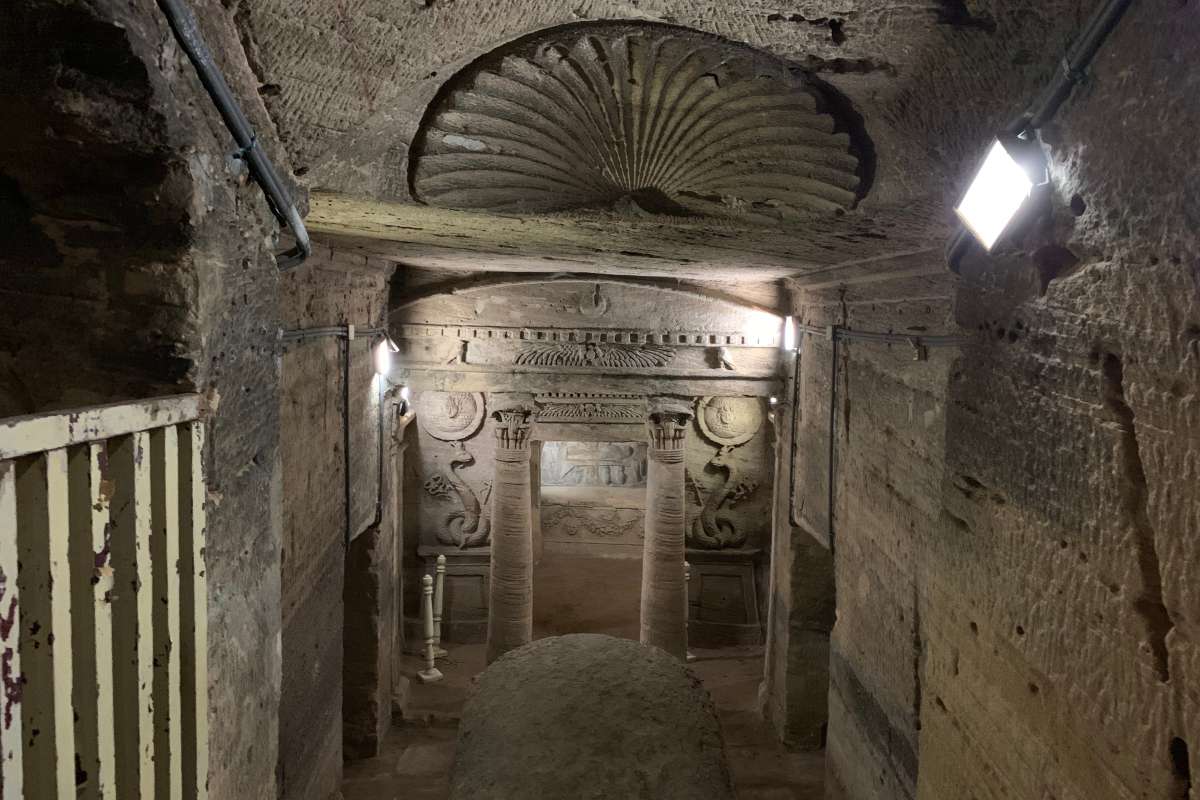
Although little remains of the Lighthouse and the Library except for their evocative memories, there are many Greco-Roman vestiges scattered throughout the city. And some of them are in a very good state of conservation, making them a must-see for those who come from tourism to Alexandria. In other cases, they are yet to be exploited, as it is known that there is an important heritage to be excavated underground.
Highlights include the Catacombs of Kom al-Sufaga, which were found in the most accidental and unforeseen way: the fall of a donkey into them. They bear the name of this humble neighborhood that on the surface does not offer much, but that underground hides an incalculable wealth. It is a mortuary complex from Roman times and consists of three levels of tombs excavated in the rock, in which there is no shortage of the triclinium for holding funeral celebrations and a central chamber. In addition, there are loculi or niches with hundreds of burials. One of the most interesting aspects of these catacombs is the surprising mixture of Roman and Egyptian iconographies in the decoration, perhaps to give greater solemnity to the place: figures representing the Egyptian god of death Anubis in the body of a Roman legionary, bearded reptiles in the Greco-Roman style, Greek medusas with hair of snakes…
It was not the only underground funerary complex, far from it. In fact, you can currently visit others that, although not usually integrated into the tours of tourism of Alexandria, help us to understand the treatment given to the deceased in those centuries before and after Christ. We can mention the necropolis of Anfushi, with several tombs whose chambers had polychrome walls with Egyptian divinities, the necropolis of Shatby, where terracotta statuettes appeared that are shown today in the Greco-Roman Museum, and the necropolis of Mustafá Kamal, with Greek sphinxes.
One of the most important places in Greek Alexandria was the acropolis, a rocky hill that brought together different buildings, some of which are partially preserved, forming a visitable archaeological park. Here is, for example, the Pompey’s Pillar. In reality, its name is erroneous and was given by the medieval crusaders, who believed that this Roman general, rival of Julius Caesar and who died in Egypt, was buried here. It is a red granite pillar, 30 meters high, brought from Aswan and dedicated to the emperor Diocletian. It is flanked by two granite sphinxes from an earlier period. Also noteworthy are the ruins of the Serapeum (not to be confused with the Serapeum of Saqqara), a great religious temple that shows the syncretism between the Egyptian and Greek religions: Serapis was a divinity that mixed Osiris and Apis of the Egyptians, and Zeus and Hades of the Greeks.
Another important vestige of this period is the Kom Al-Dikka Roman Amphitheater. It is the only one found so far, although sources from the time claimed that there were 400 in the city. Whether it is true or an exaggeration, the truth is that this archaeological jewel for tourism in Alexandria would be the main attraction in any other city in the world. Of this space dedicated to leisure and culture, the stands are preserved in very good condition, columns that were part of the structure, moats and other elements. In reality, the complex also integrates an adjoining site with baths and a Roman villa, in which colorful mosaics with animal themes were discovered: the Villa of the Birds, from the time of Emperor Hadrian. Therefore, it can be considered an open-air museum that will delight lovers of ancient culture.
You can also mention the Temple of Ras El-Soda, discovered by chance in 1936 in a residential area with this name northeast of the city and moved here stone by stone due to conservation problems in the original terrain. The result is a structure that evokes what that temple was thanks to its large staircase and its columns with Ionic capitals.
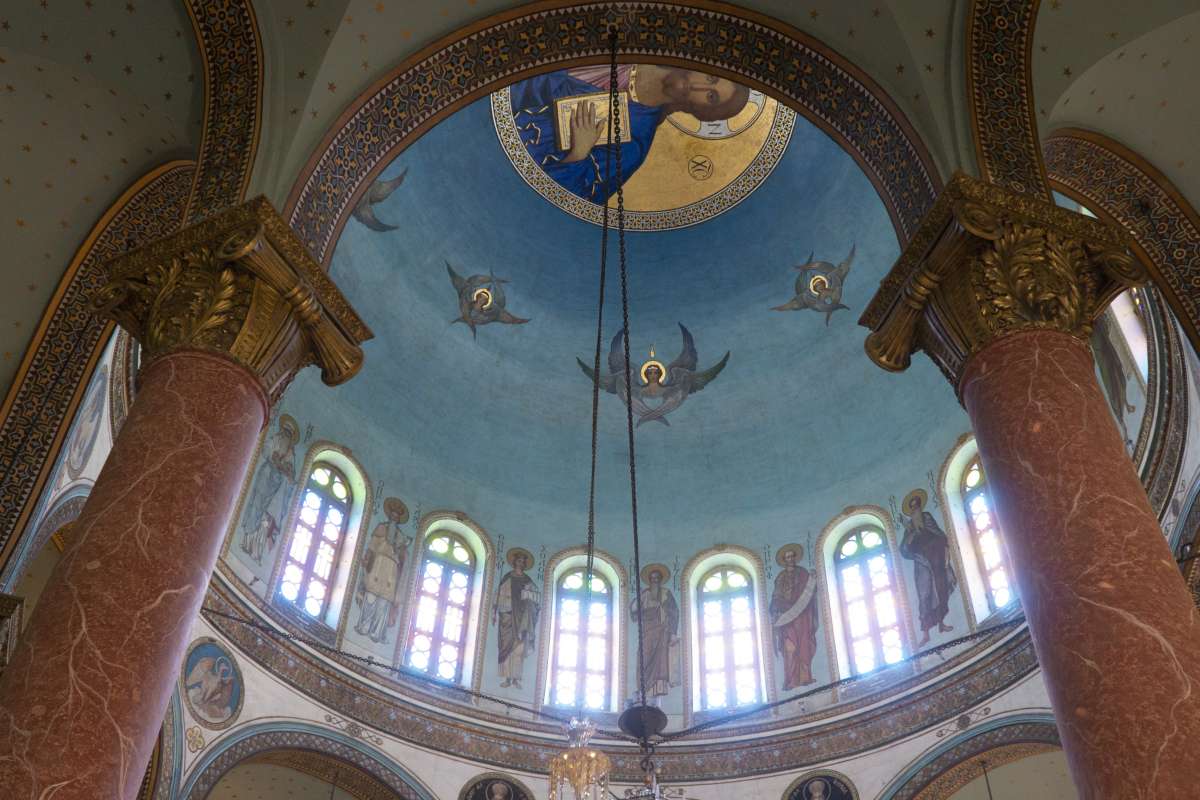
As we said, this city was for many centuries an example of multiculturalism and coexistence between religions: the Egyptian, the Greek, the Jewish and the Roman in Antiquity, and the Muslim, the Coptic Christian and also the Jewish centuries later. And although Islam is currently the majority religion, something can still be appreciated of this diversity of creeds.
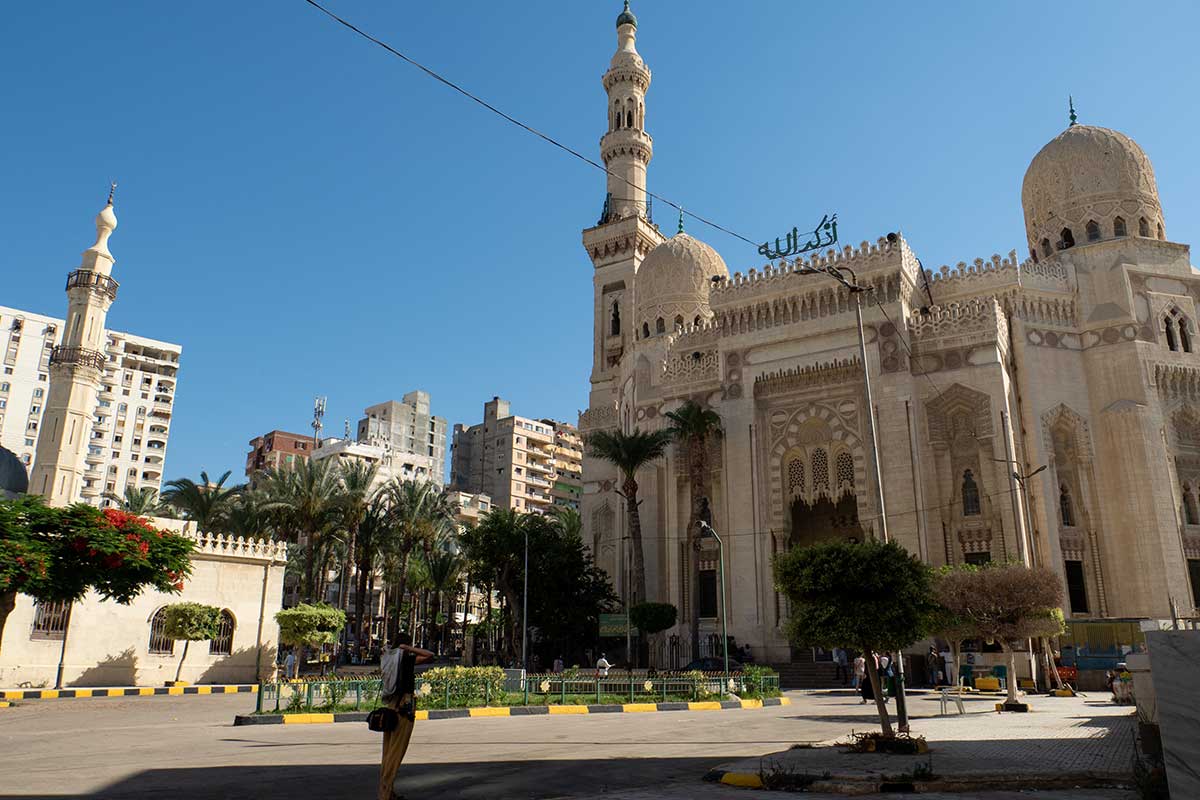
The most distinctly Islamic area is Anfushi, which is the strip of land located between the large western port and the old eastern port, of commercial character in its origin and sports in the present. This area was populated mainly after the Arab conquest and experienced great growth during the Ottoman domination . Therefore, the most interesting mosques are here, although some of them are very humble and in an improvable state of conservation. Highlights include the Abu al-Abbas al-Mursi which, although built in the 20th century, was erected on top of an earlier one. It deserves to be included in the list of attractions of tourism in Alexandria because in it this Sufi master is venerated, who came from Al-Andalus, specifically from what is now the region of Murcia: he arrived in Alexandria in the 13th century pushed, like many others, by the Christian advance in the Iberian Peninsula. He died in this city and his remains are preserved in this mosque.
Another interesting Islamic temple for those who are touring Alexandria is the Attarin Mosque, also known as the Mosque of Saint Athanasius. This peculiar name is due to the fact that it was built in the 7th century on a previous church, from the 4th century, which was dedicated to this local saint. In addition, this mosque has aroused the interest of many travelers since the 19th century because it was thought that the tomb of Alexander the Great, the authentic ‘holy grail’ of modern archeology, could be here. However, it was eventually discovered that the sarcophagus that gave rise to that hypothesis (and which is now in the British Museum) was that of Pharaoh Nectanebo II (last of the XXX Dynasty). Although its proportions are not as monumental as those of other mosques, its beautiful minaret with several meticulously carved bodies stands out. The current complex is, above all, the result of a reform from the beginning of the 20th century.
The Coptic side of the city also arouses great interest among those who are touring Alexandria. In fact, here are some of the most important temples of this branch of Christianity, which is divided into several churches: the Coptic Church (or Coptic Orthodox), the Orthodox Church of Alexandria and the Coptic Catholic Church. All of them have as their founder or as reference saint Mark the Evangelist, bishop of the city in the 1st century AD. The main Christian temples are:
With regard to Judaism, its following lost much strength with the emergence of regional tensions after the creation of the State of Israel, which caused the emigration of a large part of its population. Currently, there are two synagogues, the most important being that of Eliyahu Hanavi, recently restored.
Lovers of universal literature probably know the city for the works of some great writers, written here thanks to the inspiration that the cosmopolitan social life of the last two centuries produced in them. Therefore, many are those who come from tourism to Alexandria and take a tour of the center in search of places related, above all, with two characters: Lawrence Durrell and Constantin Cavafis. The first was a British novelist who set his famous work here The Alexandria Quartet. And the second was a poet of Greek origin and great recognition in the country, to whom Durrell also makes mention in The Quartet.
These are some places you can add to your tour:
And on this tour you can take the opportunity to savor, literally, the atmosphere that is breathed in the center of the city. In particular, its cafes and pastry shops, evocative of what in other times were meeting points for literati and artists. We can mention the Trianon pastry shop, in Plaza Ramla, of great elegance and exquisite confections, one of the best proposals for the ‘sweet tooths’ who are tourism through Alexandria. Unfortunately, many others have closed, such as Pastroudi’s Café, the refuge of Durrell’s characters, as well as the writer’s own refuge: his residence, Villa Ambrom, which was demolished a few years ago.
You can also go to the eastern port to taste one of the great gastronomic specialties of the city: fish and seafood, as it could not be otherwise. The Fish Market or the Greek Nautical Club are some of the most recommended places, elegant and with a more careful offer.
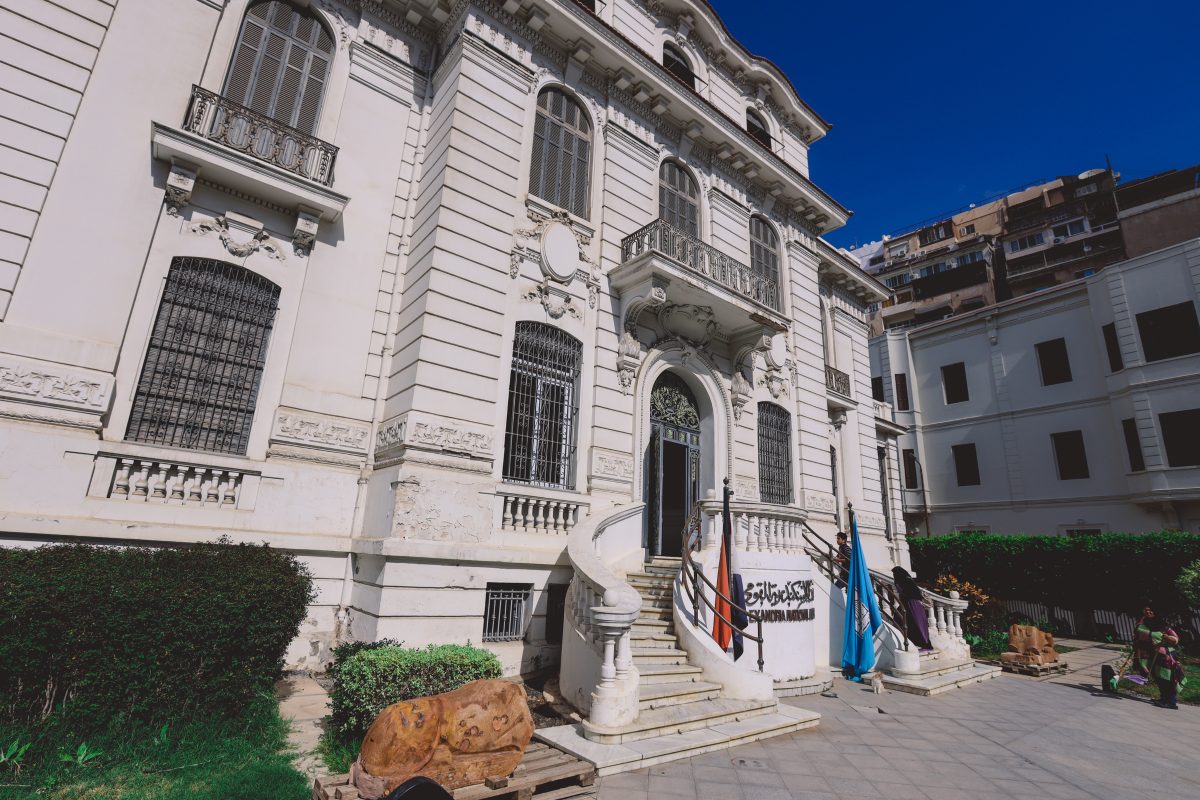
Alexandria is also one of the most interesting cities in Egypt when it comes to museums. And not only linked to Greco-Roman archeology, but also with other themes. Logically, the most important is the Greco-Roman Museum, an enormous container of pieces and remains from the first centuries of the history of this city. Its facade evokes the great Greek temples and internally it is distributed around a large central courtyard. Around it, a large number of rooms in which pieces of great value are preserved, such as a sacred Apis bull, in black granite. There are also rooms dedicated, of course, to Alexander the Great, Cleopatra and Mark Antony, with busts or coins that show their portraits. In addition, there are some areas dedicated to Egyptian culture, which was also respected and promoted by the Ptolemaic rulers, as well as to Coptic Christian culture.
In addition to the Greco-Roman and the house-museum dedicated to Cavafis, there are other museums to take into account by those who come from tourism to Alexandria:
Although we have already reviewed the main attractions of tourism in Alexandria, the truth is that you can spend your time on many other things, some of them very surprising. For example, scuba diving off its coasts. But we are not referring to diving among fish, marine flora, and reefs. We suggest that in the numerous vacation destinations of the Red Sea! The dives that are carried out here have a very different purpose: to contemplate the underwater heritage that is still preserved today a few meters deep. Works of art, statues from palaces, and other valuable objects, from shipwrecks off the coasts, military battles, or simply due to the advance of the waters of the Mediterranean, which have raised its level between 6 and 8 meters.
Therefore, there are companies that are dedicated to organizing dives of this type, and our agency can help you organize the experience. Some of the favorite underwater destinations are Cleopatra’s palace, the remains of the lighthouse on the island of Pharos, the nearby port city of Heracleion, and Abu Qir, where naval battles took place during the Napoleonic wars between the French and British.
As it is a coastal city, it also has beaches. Although the tourism of Alexandria is not based on the concept of sun and beach, there are some corners where you can take a dip if you wish. An example of this is Stanley Bridge beach, small and private, located under the towers of the famous Stanley Bridge. In its surroundings, in addition, a restoration and shopping area has been promoted, in the image and likeness of other large international metropolises.
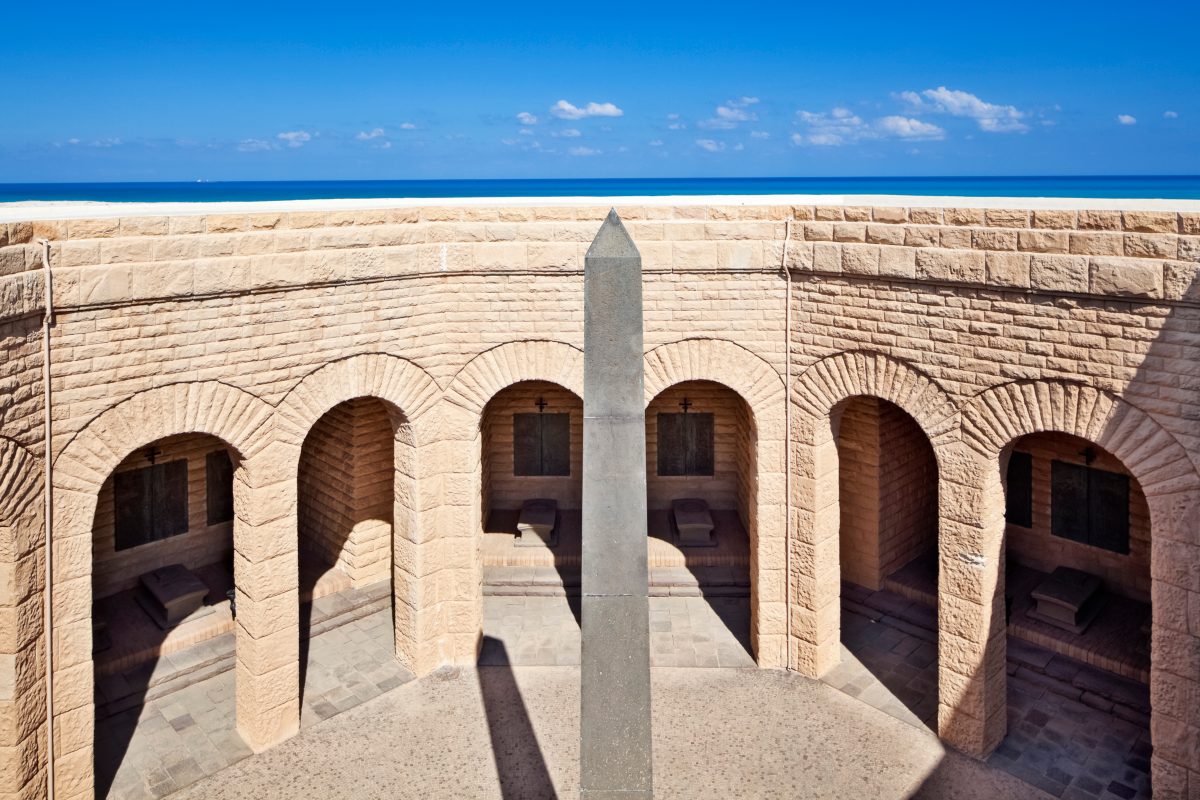
The location of Alexandria at the western end of the Nile Delta places it as an ideal ‘springboard’ for excursions along the Mediterranean coast. Of all of them, the most interesting is probably that of El Alamein, a place famous for the momentous battles that took place here during the Second World War. Therefore, it houses moving memorials to the victims of both sides, both Allied and German and Italian. And it also has a War Museum that allows you to learn about that crucial war episode of 1942. In addition, in El Alamein there are beautiful beaches, often private and linked to the resorts in the area, but you can also explore other ways to enjoy them, as many people come to them doing tourism from Alexandria.
Finally, we offer you information that will be useful if you are going to come to Alexandria for tourism. Below we explain how to get to the city, how to get around it, and where you will find a tourist office where you can get maps and brochures about this destination.
If you are going to take a tourist trip to Alexandria, you have several ways to get here. One of them is by plane, although direct flights from foreign cities are limited. These are the following, either on seasonal flights or throughout the year:
On the other hand, the most common option to arrive by plane to Alexandria is to make a stopover at another local airport. These are the Egyptian cities connected with regular flights:
On the other hand, if you decide to integrate your trip of tourism to Alexandria within a broader circuit through Egypt, you can also consider the option of coming by train, as it has numerous connections with the capital, Cairo. Another of the lines is the one that runs along the Mediterranean coast, connecting with other tourist destinations such as El Alamein and Marsa Matruh. However, it is an option mainly used by local citizens and less by people who come from tourism to Alexandria.
The same goes for the bus, although the possibilities have been expanded and improved with companies such as Go Bus: with this and other transport companies you can travel to or from Cairo, Luxor, or Port Said, among others.
However, the most comfortable, safe, and fast way is to hire a private vehicle with a driver, either a 5-seater taxi or a minivan for a larger group. That is the possibility that Egipto Exclusivo puts in your hand, both for an excursion and for a trip of several days with which to do tourism in Alexandria in depth.
On the other hand, you cannot consider the ferry as a viable option, since the traffic handled by the western port of the city is only commercial, without passenger routes from other countries. However, it is not ruled out that certain routes will be resumed, as the Venice-Alexandria route was operational in the past.
Once you are in the city, you will have different ways to get around to do tourism in Alexandria. Again, our suggestion is the private vehicle with a driver, as it is the safest and most comfortable, with which you can move without being aware of schedules and other inconveniences.
The local taxi service will force you to put your negotiating skills into practice, since they do not usually use taximeters, but the rate is agreed before making the trip. As a guide, a ride from Midan Saad Zaghloul (next to the main tram station) to the Citadel of Qaitbey could cost about 15 LE.
If your option is collective public transport, arm yourself with patience, especially due to the variable frequencies of passage and the high interior occupancy that you may encounter. The city lacks a Metro system at the moment, but in return it has an extensive network of trams, although its trains are old and slow. The main station is Mahattat Ramla, located in Ramla Square (Midan Ramla). The minibuses, for their part, are a system that, de facto, is only used by the Alexandrians themselves.
If you want to make a query or find out about a monument to visit, you will not have many options to choose from: for the moment there is only one tourist office in Alexandria. It is located in Midan Saad Zaghloul, near Ramla station. Of course: they will provide you with detailed information and maps about the city, so you can organize your visits.
And if you want to opt for the comfort of an agency with experience in the country to organize every detail of your tourist trip to Alexandria, get in touch with Egipto Exclusivo! We can take care of transportation, accommodation, restaurants, guided tours to monuments, and much more. Do not hesitate to ask us for information!


