
Egyptian writing represents one of the great contributions of this civilization to humanity. It is also an extraordinary form of expression where the magical, the artistic, and the practical were combined. The most famous of all is the one that used hieroglyphs, but this was not the only system used in Ancient Egypt: hieratic and demotic writing were also used. On this page, we will tell you everything you need to know about it, with special emphasis on Egyptian writing hieroglyphics, which will show all its beauty and mystery to your eyes in many of the monuments you will visit during your trip. Therefore, take good note of what we explain here so that you can better appreciate it when that moment arrives.
The importance of Egyptian writing is absolute. And not only locally, where it represented a useful tool for its administration and a magical form of expression for its religion. Its relevance is enormous in the History of Humanity in general, since it was one of the first writings to be developed, and that has earned Ancient Egypt the honor of being considered one of the cradles of civilization.
The term ‘cradle of civilization’ refers to those societies that left behind Prehistory thanks, among other things, to the use of a written system to document different aspects of their culture and economy: religion, commercial transactions, legal norms, etc.
Historians agree on pointing out six, emerged from the end of the IV millennium BC and the beginning of the III millennium BC: that of Mesoamerica (ancient Mexico and Central America), the Norte Chico (present-day Peru), that of the Indus Valley in the Indian subcontinent, the Chinese in the Yellow River and, above all, that of the Fertile Crescent: Mesopotamia and Ancient Egypt. All of them had a practically independent development among themselves.
Although Mesopotamia is usually determined as the civilization that began to use writing systematically, in Ancient Egypt a system of its own was adopted, with absolutely different spelling: hieroglyphs that evolved from mere adorned strokes to a complex system of more or less schematic drawings to represent sounds and ideas. In total, more than 6,000 characters make up this type of Egyptian writing, according to some estimates.
They were used uninterruptedly for more than 3,500 years, although from the mid-3rd millennium it began to coexist with hieratic writing, simpler and, therefore, faster to perform. And from the 7th century BC it did so with demotic writing (which represented a different language), even simpler to use in economic and literary matters. Therefore, in the last throes of this civilization, the use of hieroglyphs was very reduced and its knowledge, very scarce, being practically reduced to inscriptions on the wall in religious temples.
The end point of Egyptian writing hieroglyphic arrived at the end of the 4th century AD, when the last recordings were made on the walls of the temple of Philae, in Upper Egypt. The officialization of Christianity in the Roman Empire led to the closure of the religious temples of Ancient Egypt and, with it, the definitive blackout of that culture .
However, Egyptology brought the Egyptian writing and, especially, the hieroglyphs back to light. And after different achievements in the study of hieroglyphic writing during the first decades of the 19th century, in 1822 the French historian Jean-François Champollion achieved the great desire of that nascent discipline: to decipher the meaning of the Egyptian hieroglyphs thanks, above all, to the study of the Rosetta Stone.
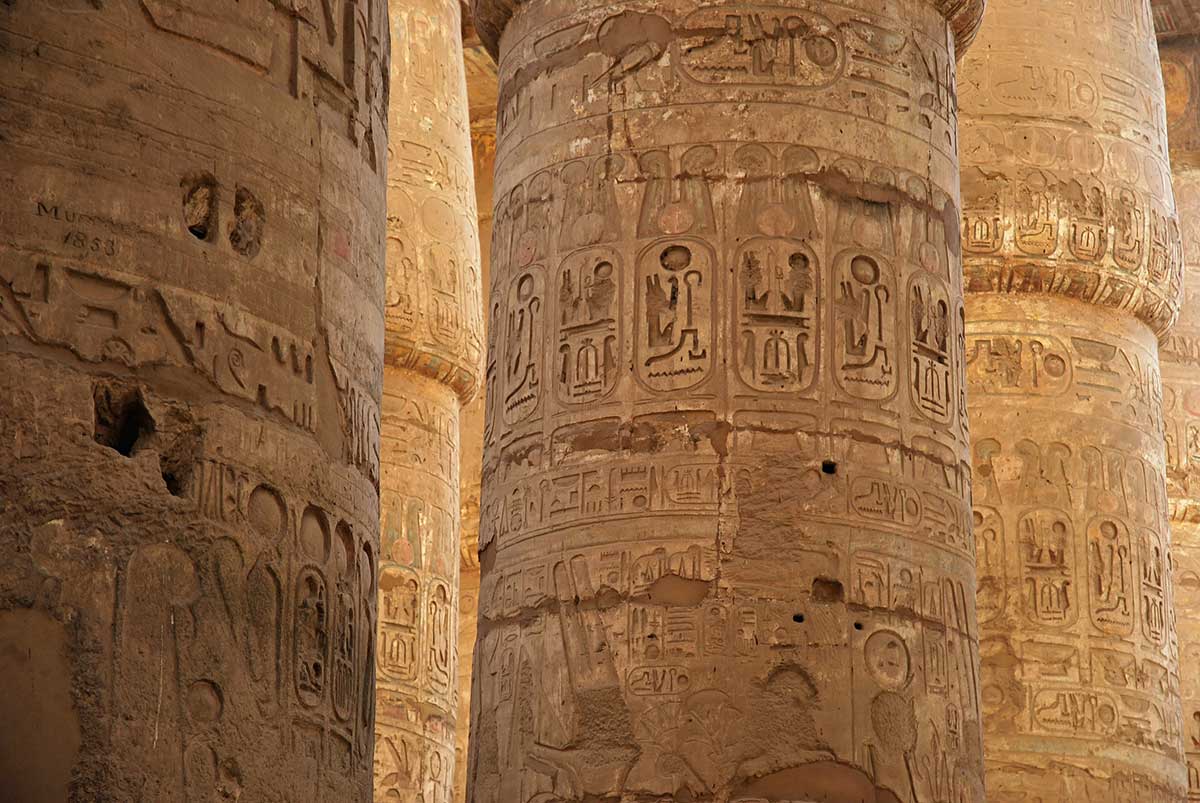
Although the term ‘Egyptian writing‘ is often used generically, the hieroglyphs have very different characteristics from hieratic and demotic writing. Therefore, we briefly review its main features.
One of the factors that made the recent decipherment of hieroglyphs so difficult was the fact of being based on a mixed system. That is, a certain sign can represent one of these things:
Another of the factors that make this Egyptian writing more complicated is the scarce representation of vowels. Although there are hieroglyphic signs for them, they are rarely used, which a priori can make words unpronounceable. However, a common convention is to add ‘a’ or ‘e’ in its reading, although sometimes the pronunciation of weak vowels can be close to that of vowels.
In modern Western languages, the direction of reading is always from left to right. And in Semitic languages, such as Arabic or Hebrew, it is from right to left. However, the hieroglyphs can be written and, therefore, read in different directions. Its orientation can be horizontal (from left to right or from right to left), but also vertical (from top to bottom) and even in boustrophedon (one line from left to right and the next in reverse, as a snake or an ox plowing moves).
Observing a text in Egyptian writing hieroglyphic you will observe that some groups of signs appear surrounded. They are the cartridges and group the signs that make up a proper name or a title, especially that of the pharaohs. This resource has two purposes. On the one hand, to clearly delimit the name, to avoid confusion about the beginning or the end of it. This was very important because, as we will see below, it was believed that an error in the reading of the name or in its pronunciation could harm the person referred to. And on the other hand, it was intended to protect that person, because what really grouped these signs was a rope knotted at one end, promoting a kind of symbolic isolation.
Except in relation to personal names, where maximum care was taken for a correct reading, the hieroglyphs were quite open reading, as we already indicated when talking about the absence of vowels. But they also did not adopt very strict spelling rules when writing . For example, it was not uncommon to omit signs, repeat them or exchange them. And sometimes this was done on purpose, with the intention of writing with a certain archaizing style. For example, this is what happened when, in the time of the New Kingdom, it was desired to write with some turns typical of the Old Kingdom.
The hieroglyphs, which were the first manifestations of Egyptian writing, are inextricably linked to the religion of Ancient Egypt. In fact, they used to use the appellative of ‘divine words’ for them and, as the cosmogony of Memphis collects, the use of the word is at the very origin of the Universe, a miracle worked by the god Ptah.
While this Egyptian writing arose to record practical needs such as the accounting of supplies and salaries, it ended up finding its place in supports that guaranteed the eternity of what was written: the stone blocks of temples and palaces, the tombs of the deceased or the jewels and objects of their funerary trousseau, but also on papyrus when this material was used in the Books of the Dead.
This is explained because it was considered that by pronouncing the name of a deceased person, he was returned to life. Por therefore, the proper name had double importance: for practical issues in earthly life and for the immortalization of his ba (soul) in the afterlife. And in this last sense, the Egyptian writing was the tool that prevented it from falling into oblivion. In addition, it avoided errors when naming the deceased, as it was also believed that this could harm that person in the life of the other world.
This is easy to understand with one of the most famous examples of all Ancient Egypt: the pharaoh Akhenaten. This king, during the period known as the Amarna Period, decided to undertake a religious revolution promoting the almost exclusive cult of the solar disk Aten and erecting himself as his prophet. Upon his death, this was considered an authentic heresy, so his name was attacked without mercy: it was erased from all the temples and, according to some hypotheses, it was done not only to eliminate it from history but also to torpedo his life in the afterlife, taking advantage of the magical character of the Egyptian writing.
Another factor that influenced the maintenance of hieroglyphs in the religion of Ancient Egypt is its enormous artistic value. Whether they appear engraved or painted, on the walls of temples or funerary enclosures, in the papyri of the Books of the Dead or on stone stelae, their visual impact leaves no one indifferent. And that contributes to generating a state of mind conducive to the veneration of the gods. For all this, many believe that the hieroglyphs can be considered the most beautiful writing system ever used by man.
When you visit the spectacular temples of Ancient Egypt during your trip, you will be presented with the best opportunity to put your knowledge of Egyptian writing and, in particular, of hieroglyphs into practice.. And although you may feel overwhelmed at first by this endeavor, with patience, a good eye and the help of our guides you will be able to decipher much of the information that will be presented to you.
Like any language, it is necessary to study it in depth to be able to master it. However, you can get a grammar book to carry around and consult the signs of this Egyptian writing when you are in front of them. In this sense, it is worth mentioning the work of Alan Henderson Gardiner, who in the 20th century systematized what was known about the hieroglyphs by grouping them into more than twenty thematic groups, such as those related to the gods, with man, with woman or with buildings, among others. It is a very exhaustive work, although you can also get others of pocket, often based on the work of this British Egyptologist.
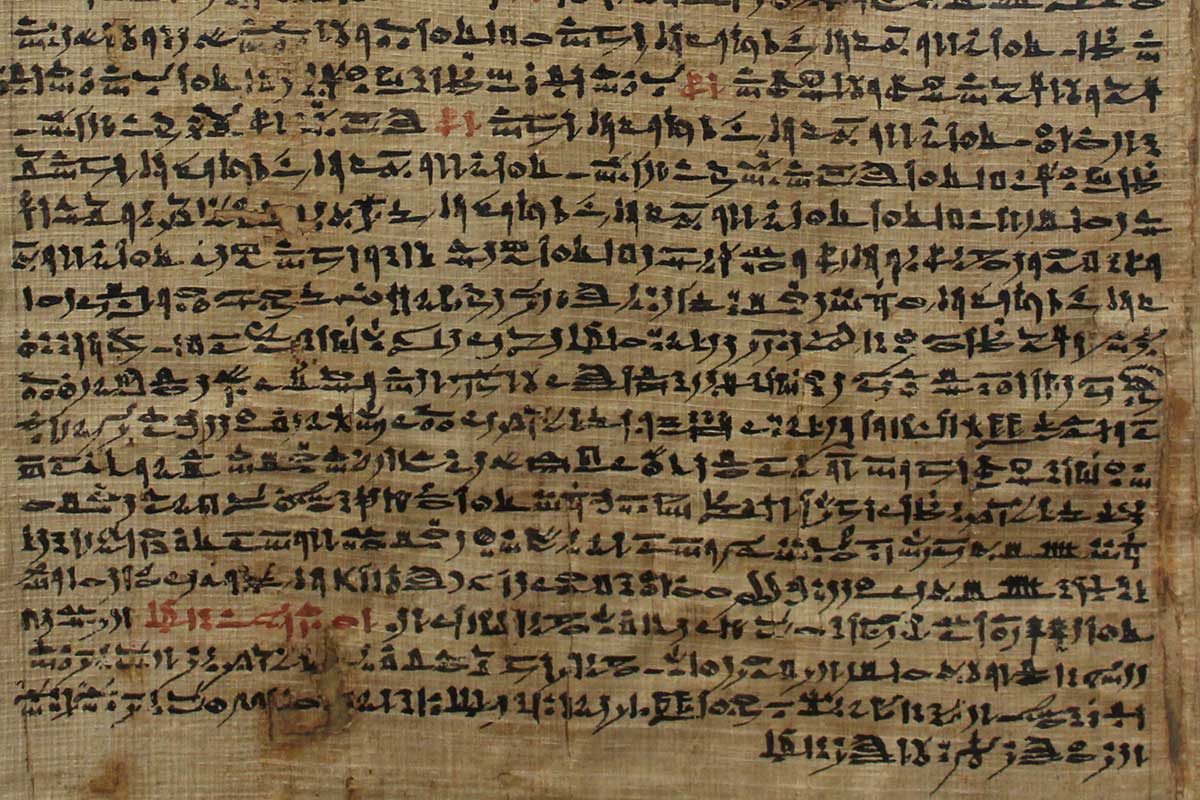
When talking about ‘Egyptian writing’, reference is not only made to hieroglyphs, which are more famous and evocative for their beauty and magical attributions. This concept also includes hieratic writing and demotic writing, which we review below to understand their differences.
As it is easy to understand, hieroglyphs were not a very practical and fast system to documentally record day-to-day activities. Therefore, in the mid-3rd millennium BC another Egyptian writing emerged : the hieratic. It was a simplification to adapt it to the use in papyri, mainly for administrative purposes (letters, accounting, legal texts, etc.), although it was also used for religious reasons.
Its signs were more stylized and schematic, more suitable for the reed pen (hollow cane) and black ink, which were the main method for writing at that time. It was also used for the engravings of the ostraca (calcareous or ceramic stones) that served to make sketches before transferring the writing to papyrus, much more expensive.
Other supports in which this Egyptian writing hieratic were wood and leather, and even clay tablets by means of incisions, as in Mesopotamian cuneiform writing. However, neither clay tablets were exclusive to hieratic writing nor was this support used only in Mesopotamia, since it should be remembered that the oldest find of this type occurred in Umm el-Qaab (near Abydos): some vessels with Egyptian hieroglyphic writing using this method, datable between 3,400 and 3,200 BC
In any case, and returning to hieratic Egyptian writing, its knowledge was more widespread than hieroglyphs, considered truly sacred, while this had much more presence in daily life, although it was not taught in a generalized way either.
These are, briefly, some of the characteristics of Egyptian writing hieratic:
Between hieratic and demotic writing something similar happened as between hieroglyphic and hieratic. That is, demotic arose as a consequence of the abbreviation of hieratic, with the intention of making it even more practical for daily purposes: making contracts, economic accounting and other day-to-day matters. In fact, demotic was also a language in itself, which in turn was a simplification of the ancient Egyptian language.
The creation of this language and its alphabet was gradual and is considered to have become relevant from the mid-seventh century BC. However, the Egyptian demotic script did not replace hieratic, which lasted until the Roman domination period. The validity of demotic was also limited in time, since from the second century AD it was progressively displaced by the Hellenistic Greek language for official purposes and important documents.
Demotic, on the other hand, remained with a more popular and oral character, as its name, given by the Greeks, indicates: demotika or ‘of the people’. And it should not be confused with demotic Greek, which had the same popular concept but nothing to do with Egyptian. It is related, however, to the Coptic language, which it greatly influenced, being used by the first Christians of Egypt and still used today as a liturgical language.
One of the aspects that contributed to giving a magical, mythical and mysterious character to the hieroglyphs is that only 1% of the population was able to interpret them. This 1% includes not only the priestly caste, who had to understand them for the performance of their religious rituals, but also the scribes. They had the privilege of having this divine wisdom, formed by the ‘words of Thoth’, the god of Egyptian writing and protector of this office, and therefore they were able to transfer it to the different supports, especially to the Books of the Dead.
However, the scribes also used Egyptian writing also for more practical and earthly purposes. For example, they were in charge of recording the Nile floods, something fundamental to organize the agricultural production of the country. Or of carrying out inventories in granaries for food supply purposes. And many other actions.
When talking about Egyptian writing we cannot forget the Books of the Dead, which were its best exponent since the New Kingdom. These were funerary texts and their name would be more appropriately translated as ‘Books of the exit to the day’ or ‘to the light’, since they narrated the awakening of the deceased after death to face the Judgment of Osiris afterwards.
They were written on papyrus rolls and decorated with polychrome vignettes in which the deceased and the gods involved in the process were shown. In that narration, the Egyptian writing hieroglyphic or hieratic was used, so they represent unique documents in which painting and art are masterfully combined.
For all this, it is easy to understand that The Book of the Dead was an object of great value, both spiritual and economic. In fact, it is believed that the price of these writings could represent the salary of an entire year. At the beginning they were only reserved for the royal family, although later they were also commissioned by members of the social elite: priests, officials and scribes, with a predominance of male owners.
During most of the time they did not have a fixed structure, although from the XXVI dynasty (Saite period) they did adopt a more or less common order. In that case, it usually began with chapters dedicated to the entrance of the deceased into the tomb and the descent into the underworld. Subsequently, an exhaustive explanation of the gods was made and the deceased was ‘awakened’ to make him travel in the solar ark during the day, until he met Osiris again in the underworld, at nightfall. And in the last chapters, the claim of the dead as a candidate to access eternal life is made.
Many of these books, the pinnacle of Egyptian writing, are today exhibited in museums around the world, but luckily for the traveler who visits this country there are also some in sight of visitors, for example in the Egyptian Museum of Cairo. This is the case of Maiherpri’s, originally deposited in the tomb of this noble in the Valley of the Kings of Thebes .